Relics · Material evidence
Objects in isolation
A room of close view. These studies isolate surface, edge, and material weight so the collection can read as evidence rather than announcement.
Curatorial Note
Relics strip the series back to evidence. Here the work is less public and more forensic: metal, leather, enamel, and cloth treated as carriers of memory, pressure, and symbolic residue.
Studies
10 objects in Relics.
The second ten reduce the collection to metal, leather, cloth, enamel, and signs.
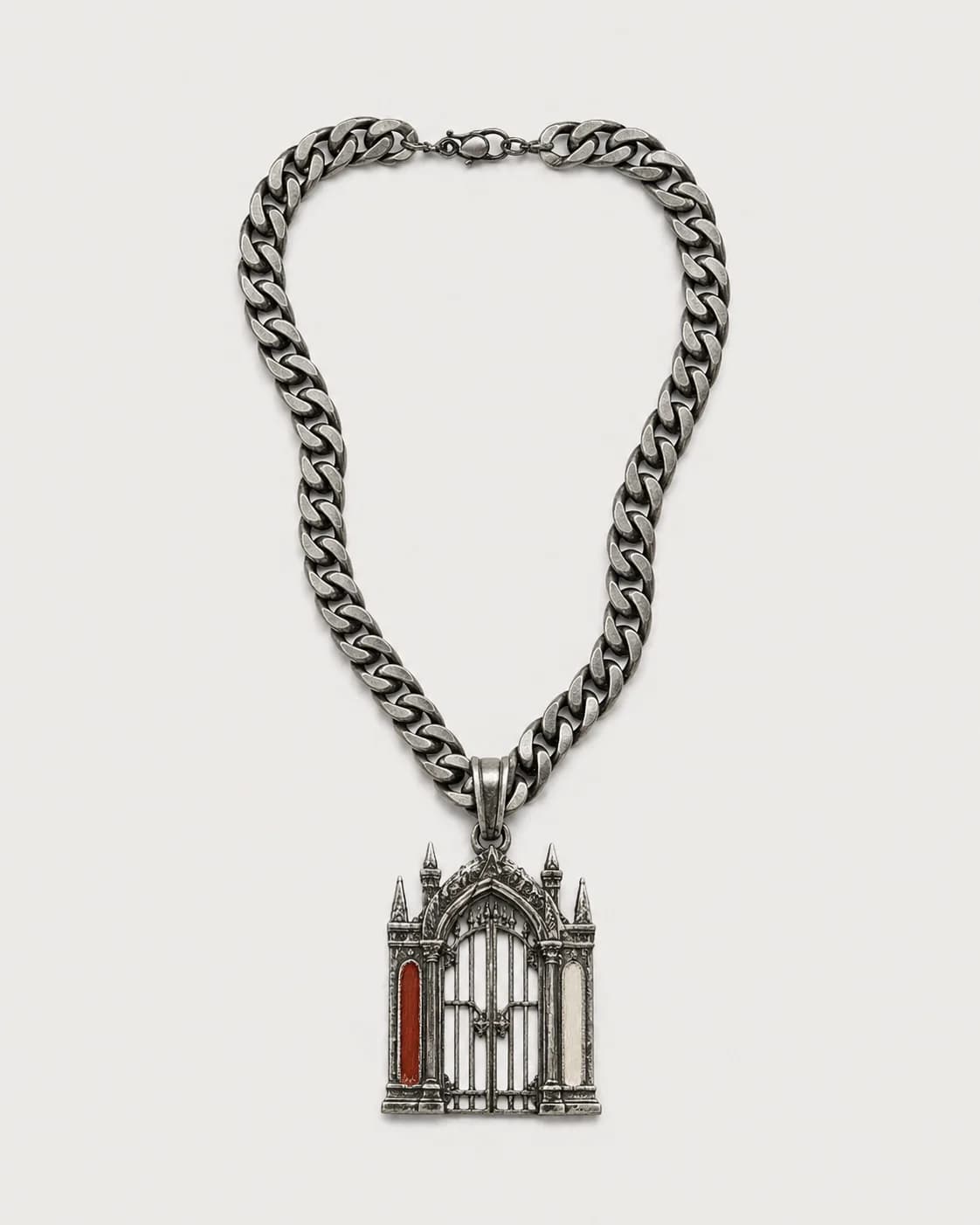
Study 1 · Relics
Gate Pendant
A portal reduced to jewelry scale, turning entry itself into a relic of passage.
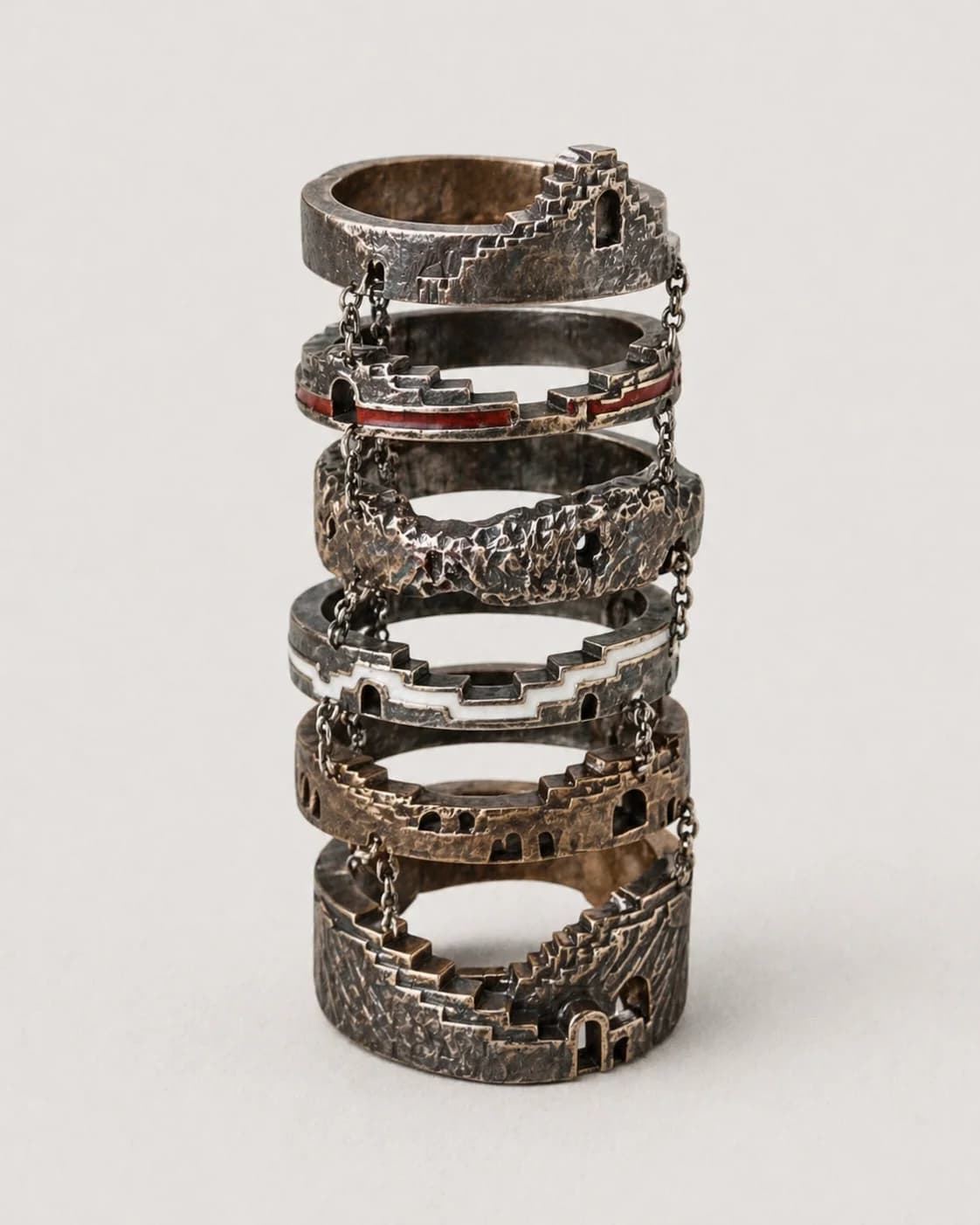
Study 2 · Relics
Terrace Cuff
A heavy wrist study that treats ascent as carved relief and compressed topography.
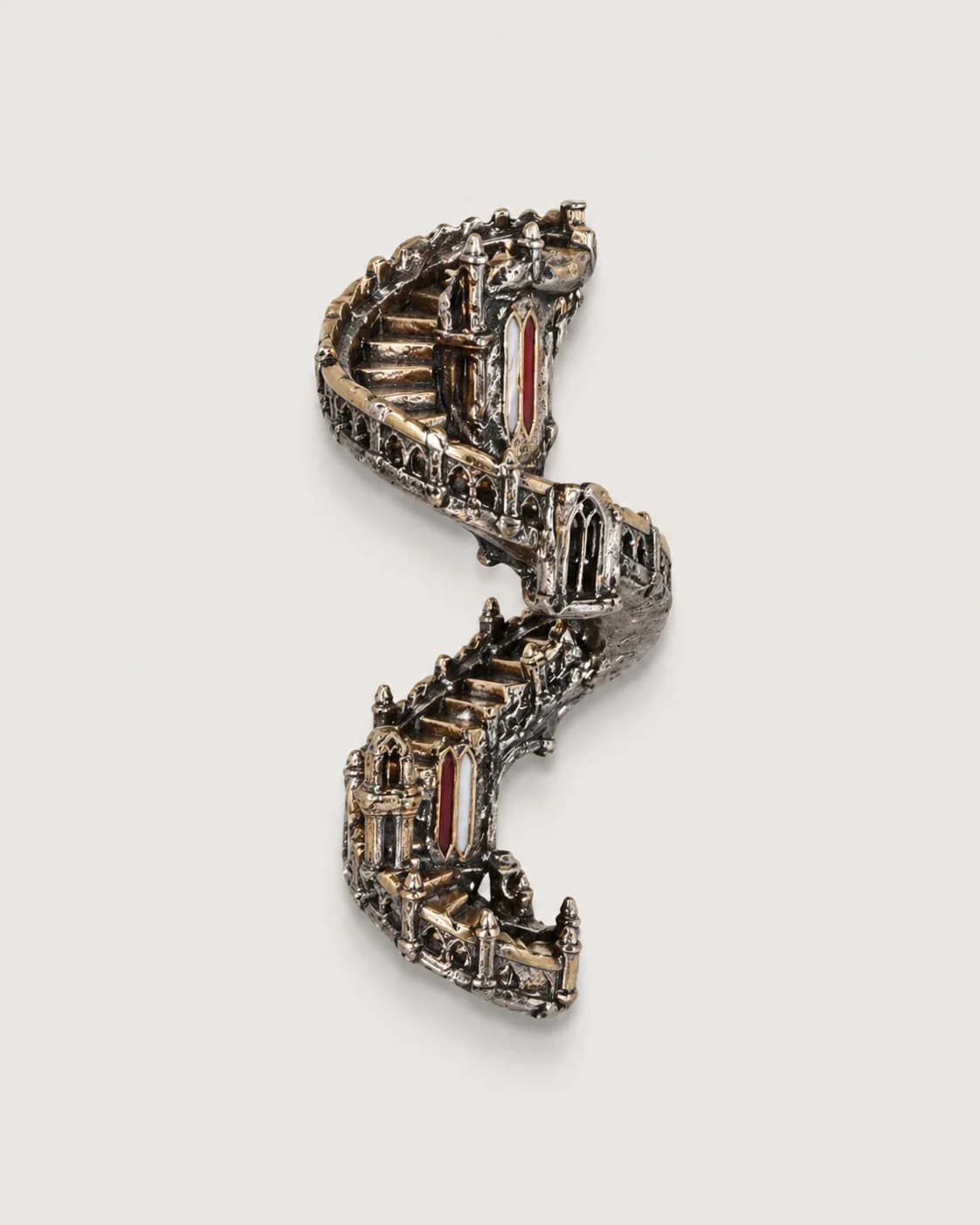
Study 3 · Relics
Stair Sigil
A pendant that condenses the staircase into emblem, line, and directional force.
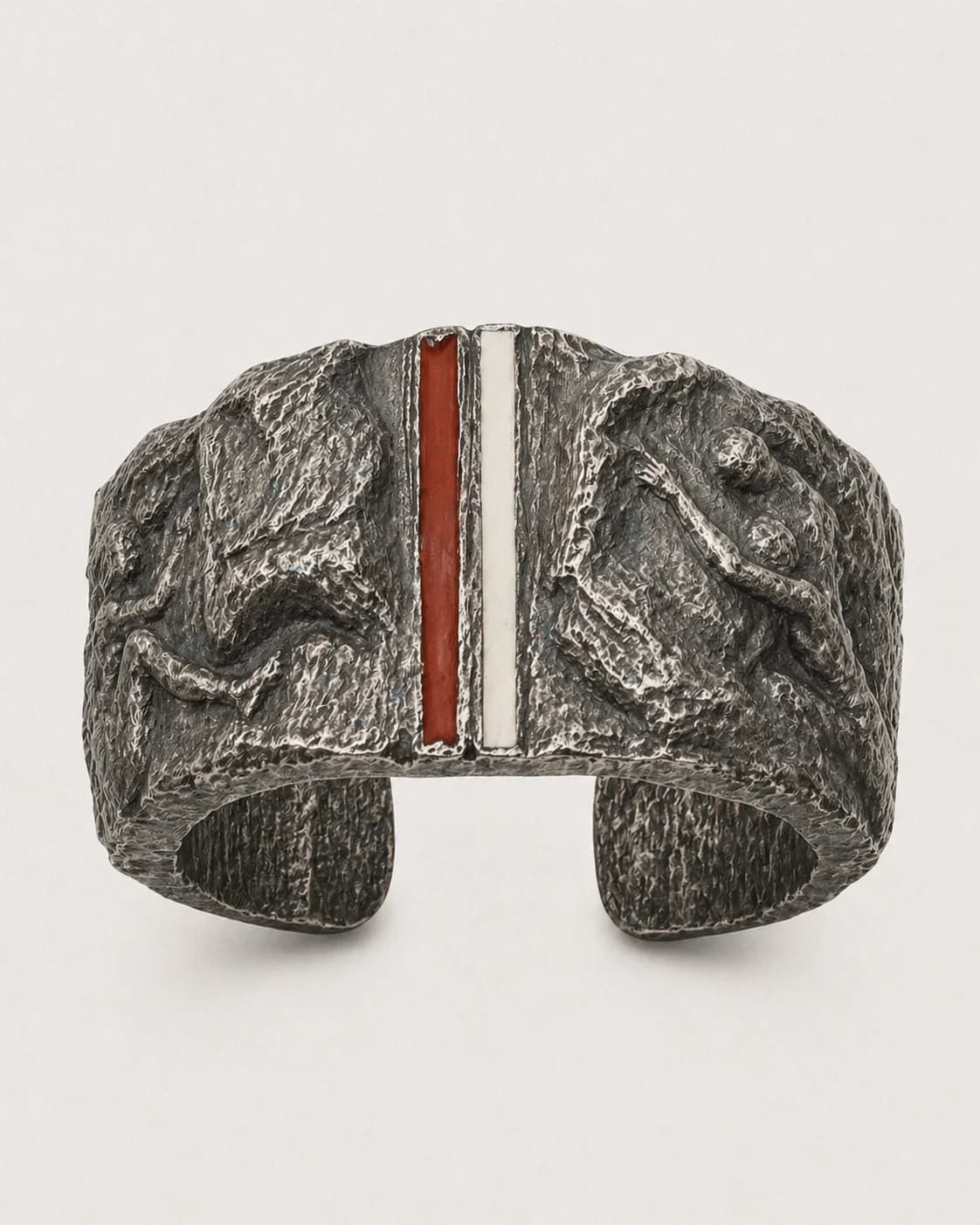
Study 4 · Relics
Relief Cuff
A sharply bounded cuff where enamel carries the collection's binary charge in a single vertical mark.
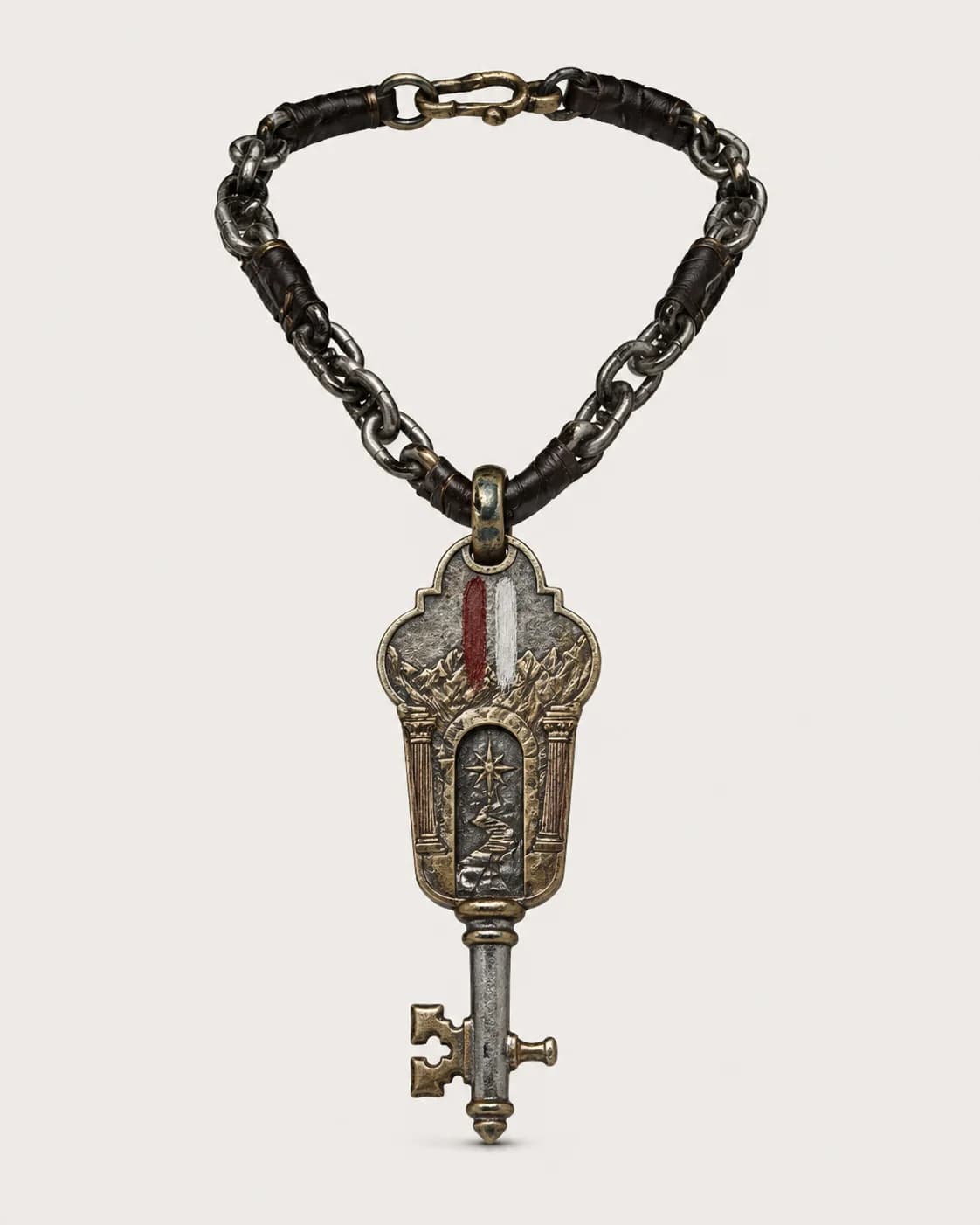
Study 5 · Relics
Pilgrim Key
A key as devotional tool, framing access as earned rather than given.
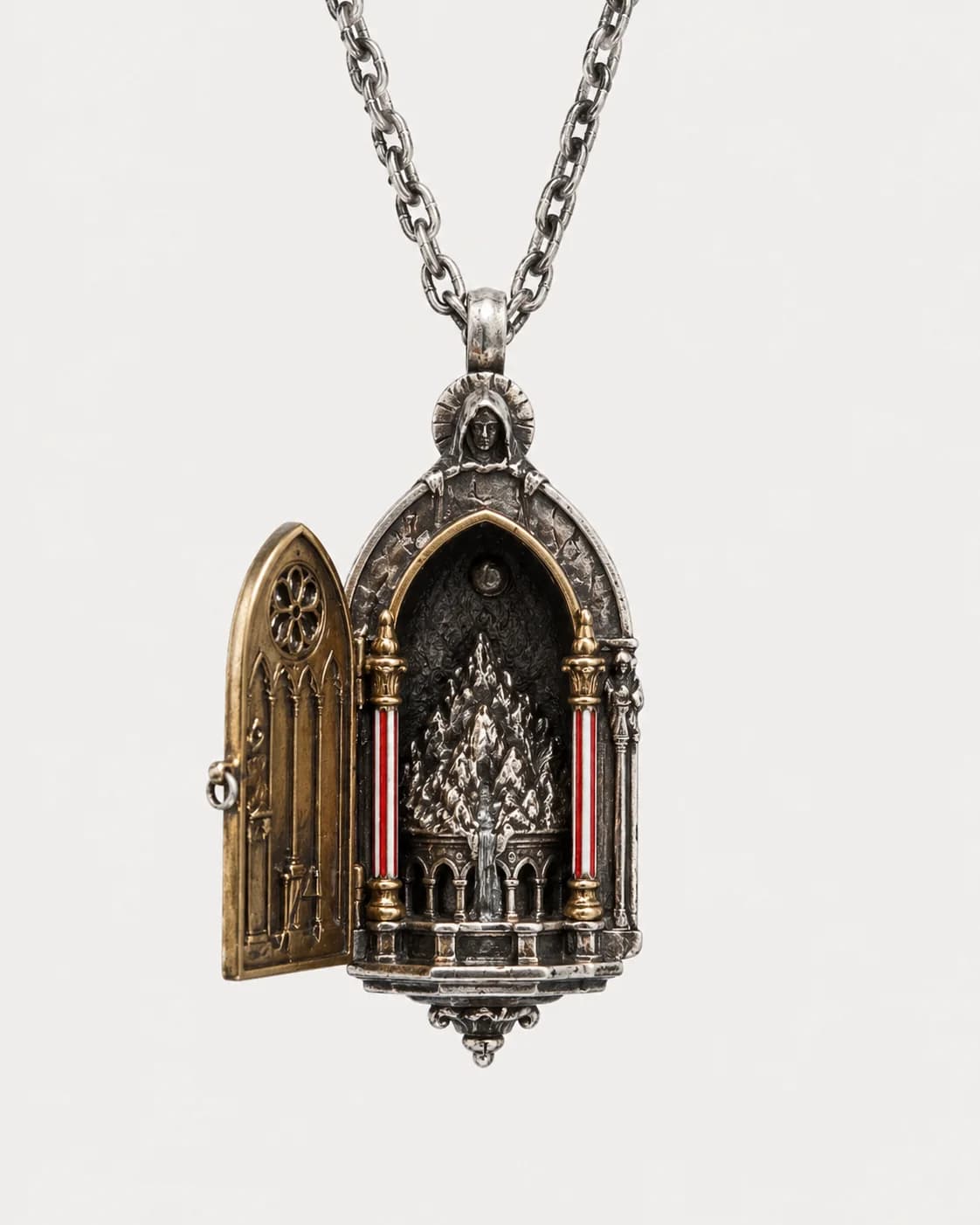
Study 6 · Relics
Mountain Reliquary
A reliquary-form pendant that turns the mountain itself into a container of belief.
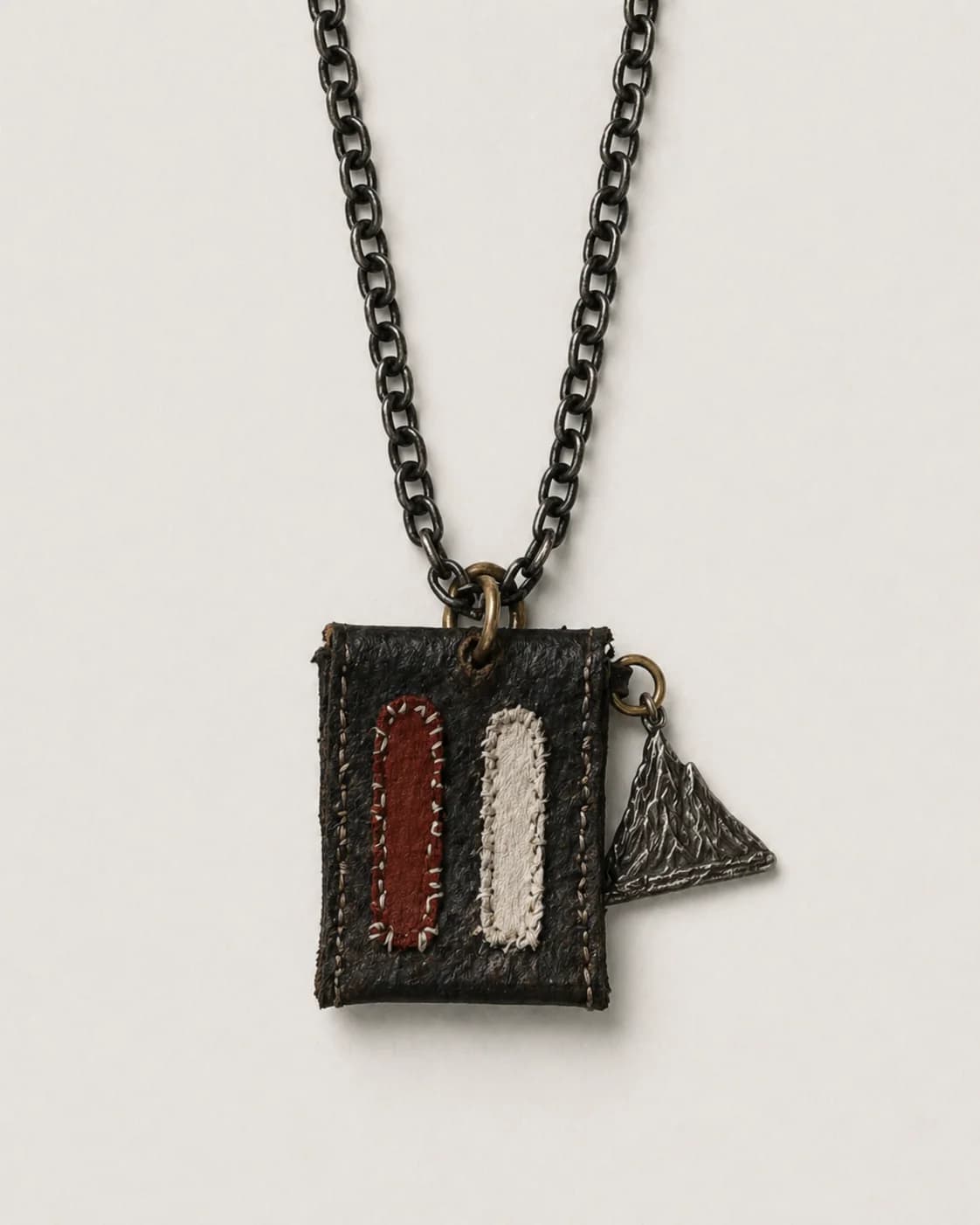
Study 7 · Relics
Book Charm
A miniature codex in leather, bringing study, reading, and remembrance into the jewelry language.
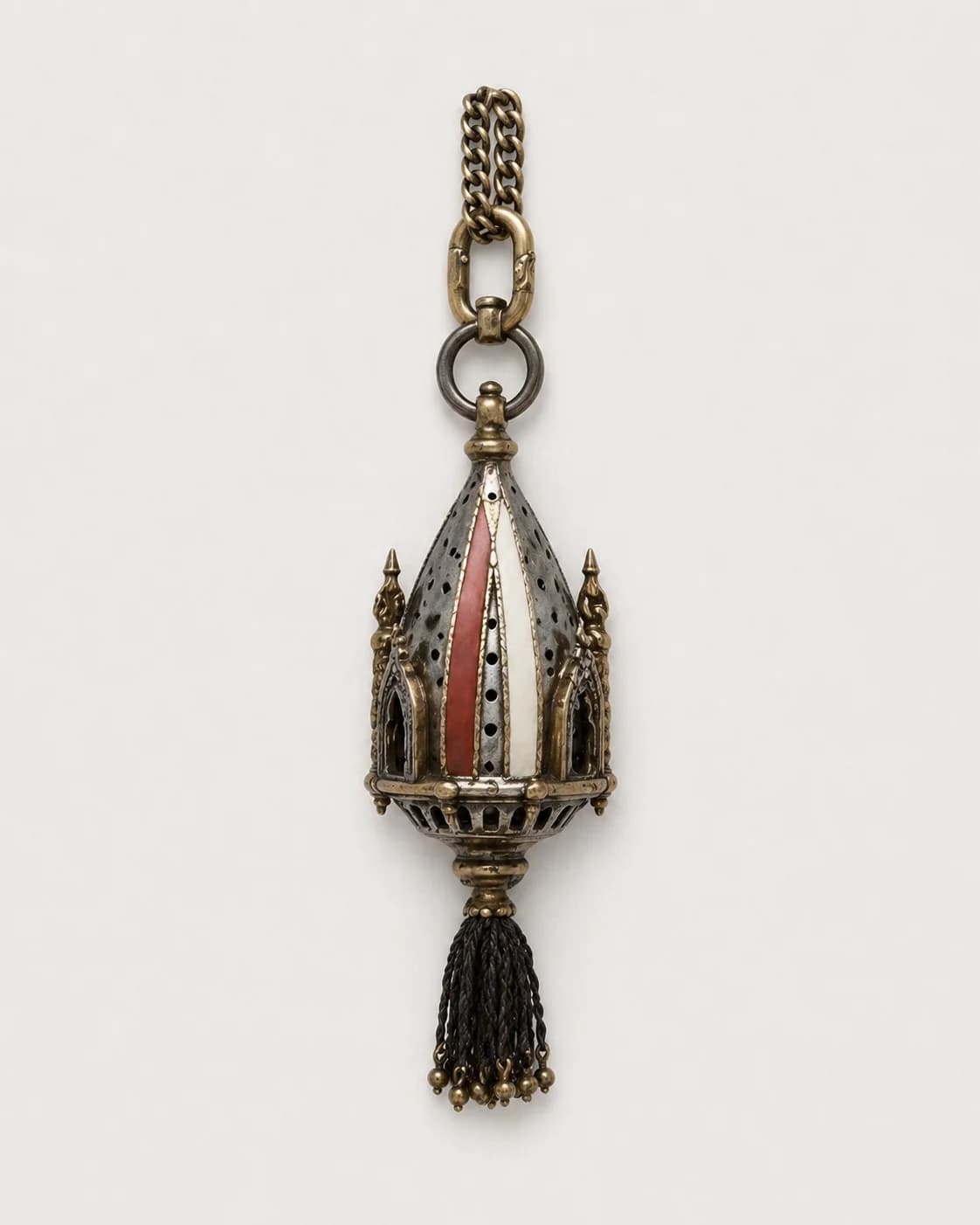
Study 8 · Relics
Lantern Pendant
A directional light object, translating guidance into a suspended wearable form.
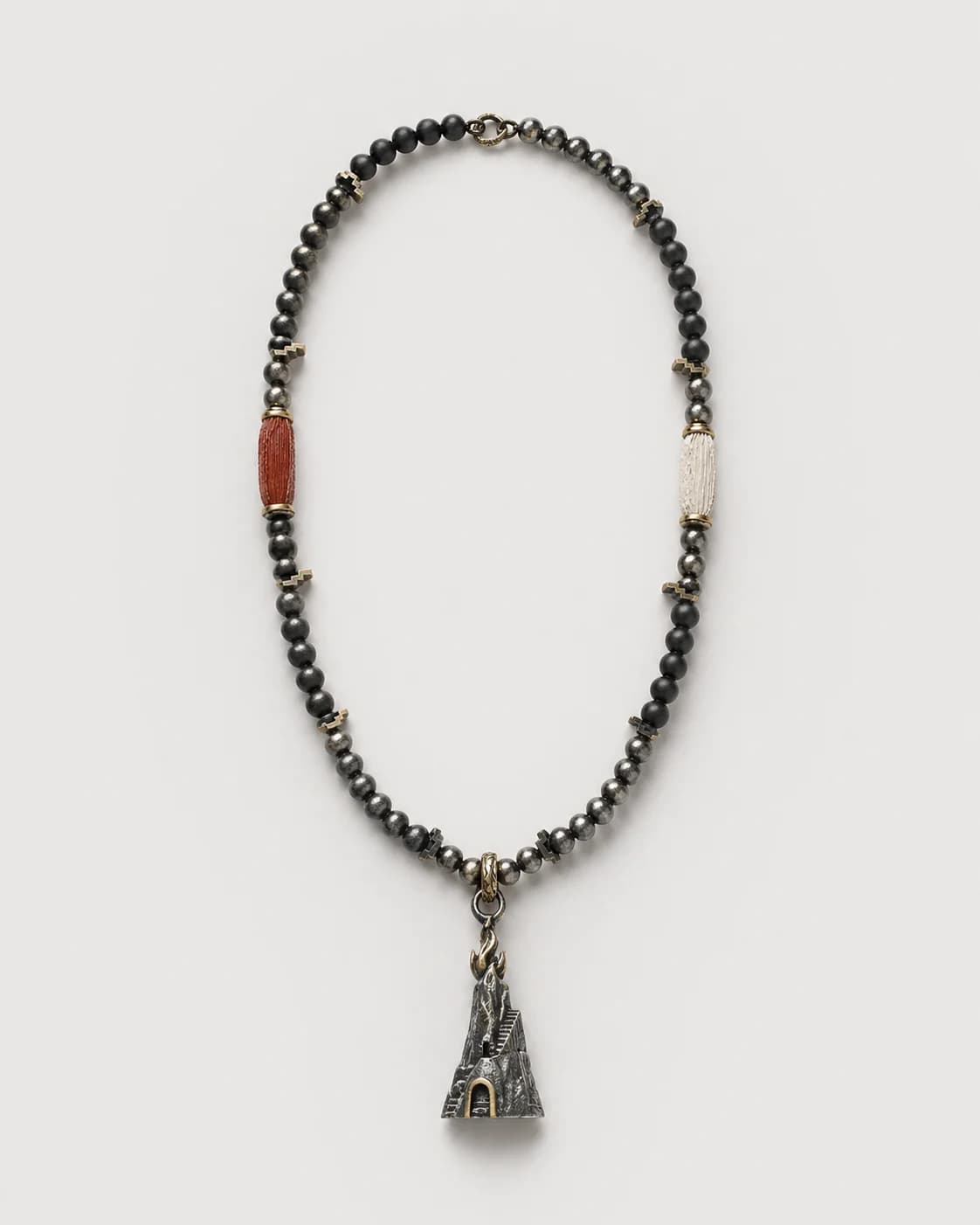
Study 9 · Relics
Beaded Mountain Necklace
A mountain sign set within beadwork, shifting the climb into rhythm and ornament.
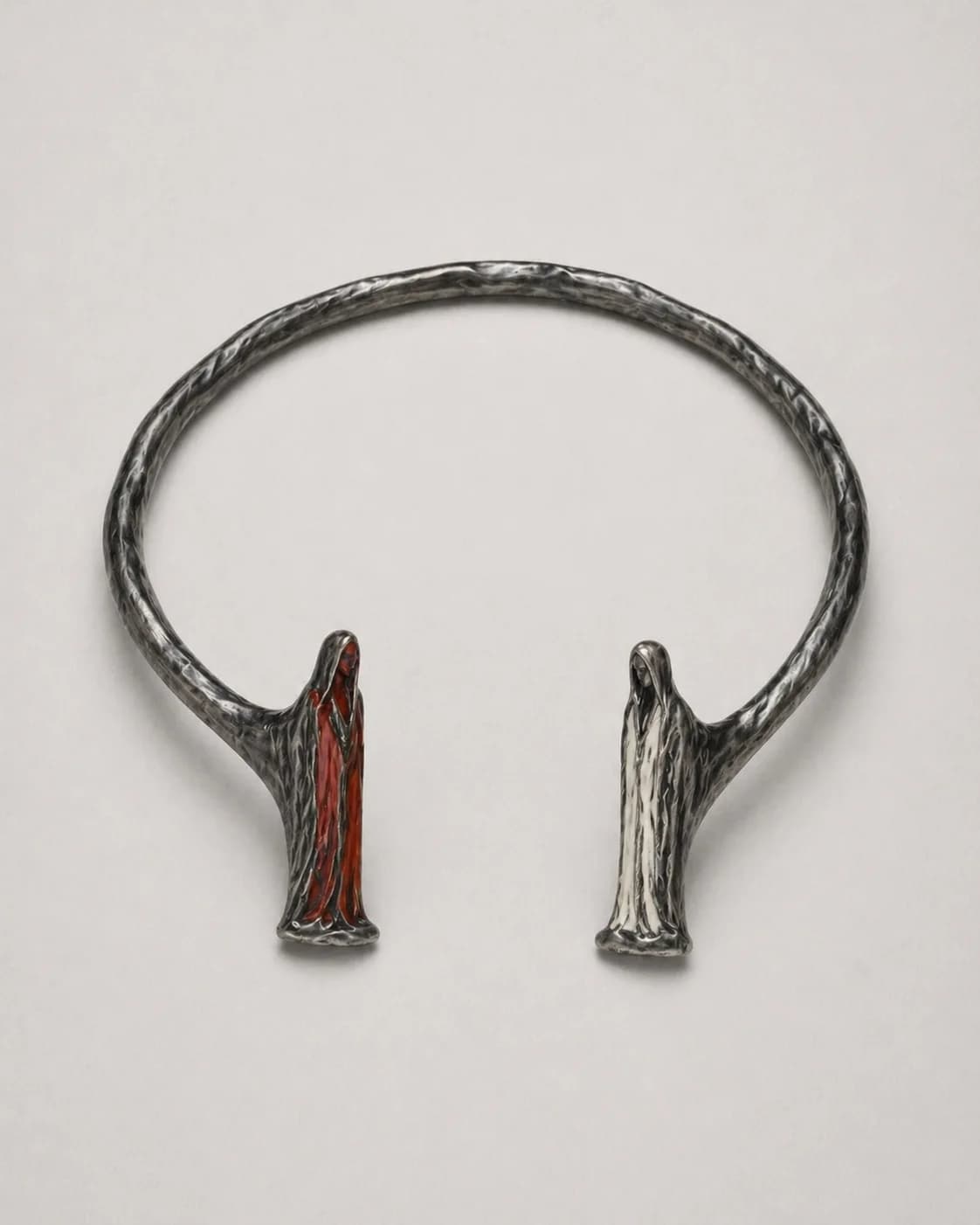
Study 10 · Relics
Pilgrim Torque
An open torque that stages encounter at both ends, holding the series between two facing presences.
Other Rooms
Continue through the cantica.
Each room changes what the collection is allowed to mean in public.